
A Simple Way to Support Your Animals Right Now
Using color to help regulate, soothe, and support their system at home


You may have heard to paint your bedroom a soft blue for better sleep. Or that wearing red gives you confidence before a big presentation. That certain colors help kids focus in a classroom, or that specific shades are used in hospitals to calm nerves and ease anxiety.
You’ve probably absorbed more about color than you realize.
Those associations aren’t random. They point to something much older and much more specific, the body’s energy centers, or chakras, and the vibrational frequency each one carries.
And the part that matters for animals is simple. They’re naturally drawn to the frequencies their body needs. This isn’t something we teach them. They already know.
I was first introduced to using color therapy specifically with animals through my friend and colleague Julie-Anne Heart of Naturally Cats. She works exclusively with cats and has been doing extraordinary work in this space. But as I started incorporating it into my own practice and laying colors out across my very full household, dogs, cats, pigs, goats, and everything in between, I saw how naturally every animal responded to it. It wasn’t limited to one species. They all responded to it in their own way.
What is color therapy?
Color therapy, also known as chromotherapy, is the use of color frequencies to support the body, mind, and spirit. Each color vibrates at a specific frequency, and those frequencies correspond directly to the body’s chakra system, the core energy centers that influence physical health, emotional wellbeing, and energetic balance.
Here’s a simple breakdown:
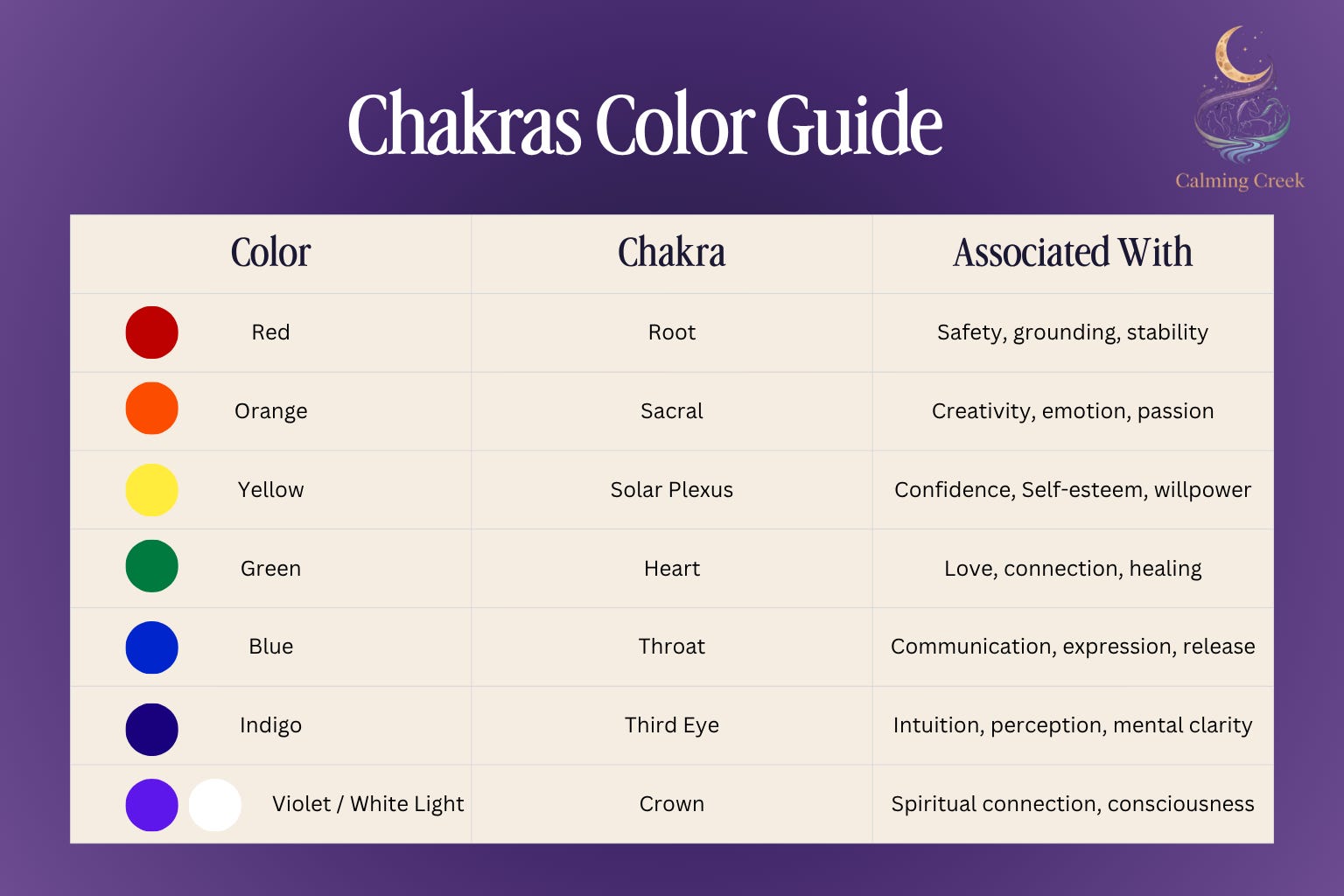
For the crown chakra, both violet and white carry the right frequency. White in this context refers to pure light energy rather than a specific pigment, a white blanket or fabric works beautifully.
When an animal gravitates toward a specific color, they’re essentially telling you something. They’re drawn to the frequency their body needs in that moment, to clear, balance, or restore a particular energy center.
What I’ve seen in my own household
I live with a lot of animals. And I mean a lot. Dogs, cats, goats, pigs, my home is its own ecosystem. So when I started laying out colors more intentionally, I wasn’t doing it as an experiment. I was doing it because I was watching my animals and listening to what they were showing me.
And living in a space like this, I started to notice that they often move through similar emotional states together. Not always, but during heavier moments, I would see them gravitate toward the same colors.
When our household was moving through grief, I noticed a clear gravitation toward red, orange, and green. The root and sacral chakras pulling toward grounding and stability. The heart chakra reaching for healing and connection. It made complete sense once I saw it, animals don’t intellectualize grief the way we do. They just move toward what they need.
During summer thunderstorm season, when the storms roll in almost daily, I put out extra red. The grounding energy of the root chakra. And consistently, that’s where my animals would go. Not because I directed them there. Because they knew.
And then there are times where it’s more individual. My cat Tibby was vomiting and having digestive issues. She went straight to yellow, which corresponds to the solar plexus, the chakra associated with digestion and the stomach. But she was also spending time with blue. The throat chakra. Which makes sense when you think about it, the body trying to expel something, the energy of release and letting go, but also the physical pathway of that release moving up and out through the throat. She was working two chakras at once, which animals will do when they need to.
This is what I mean when I say they already know. We just have to make it available to them.
How to do it, and yes, this works for all your animals
Color therapy works for every animal in your care. Most people don’t realize this, but all animals have a chakra system. So this is something you can offer to any animal in your care.
The good news is that you don’t need to buy anything special or overthink this. Look around your home first. T-shirts, blankets, scarves, fabric swatches, pillow covers. If you have it in the right color, it works. The frequency is in the color itself, not the material.
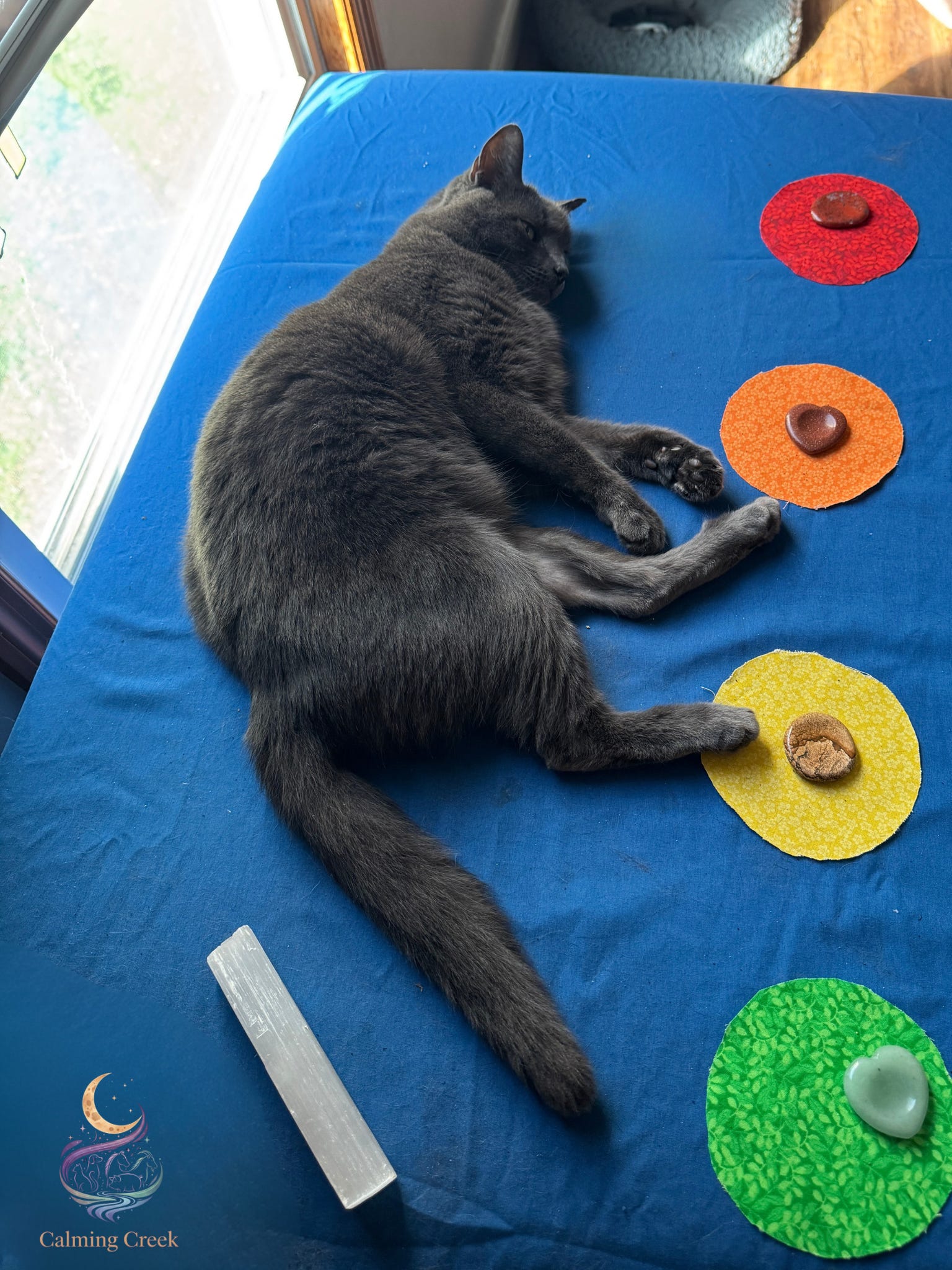
A few simple guidelines
Place colors in areas your animals already like to hang out. Don’t put them on established beds or near food and water bowls, you want the color to be an invitation, not an imposition. Lay out two or three colors in a space, a little distance apart, and let your animal choose. Don’t force it. Don’t hover over them waiting for something to happen. Just make it available and step back.
For those of us with multiple animals and multiple spaces, I keep at least one of every color in different rooms so everyone has access without competition.
What to put out and when
This is where it gets really useful. Instead of waiting until something is wrong, you can be proactive. If you’d rather have something you can quickly reference or save, I’ve put together a simple guide you can find it linked here.
Here are some situations where specific colors can help:
Grief or loss in the household
Reach for red, orange, and green. Grounding, emotional support, and heart healing. When an animal loses a bonded companion or senses that the household is grieving, these three together create a really supportive energetic environment.Introducing a new animal
Green and orange are your friends here. Heart chakra for opening and connection, sacral for easing emotional adjustment and social dynamics. This is a transition, and the nervous system of every animal in the home feels it.Digestive issues, vomiting, stomach sensitivity
Yellow first. Solar plexus all the way. If you’re also noticing a lot of expelling or release, add blue alongside it for the throat chakra.Anxiety, fear, or thunderstorm season
Red. Grounding is everything here. When the world outside feels unpredictable and overwhelming, the root chakra needs support. I put extra red out every summer when our daily storm season rolls in and I see it get used consistently.Vet visits or anything that requires a crate or carrier
Tuck a red cloth or blanket inside. Grounding before a stressful experience can make a real difference in how an animal moves through it. You can also add green if separation or fear of the unknown is part of the picture.Cognitive decline or aging animals
Violet and white light for the crown chakra, and indigo for the third eye. Older animals can become very anchored in physical discomfort and disconnected from both their body and their awareness. Supporting both can help with clarity, orientation, and a greater sense of ease.General stress or tension in the household
Blue and green. Calming, releasing, heart opening. Sometimes the whole household just needs to exhale, and these two colors together support exactly that.
A note on flexibility
These are general starting points. You may notice your animal responding to something slightly different depending on how they’re experiencing it. The same emotion can show up in different parts of the body, so what they’re drawn to might reflect that. Let their choices guide you.
How much to put out
Don’t put every color out everywhere all at once. Two or three in a space is plenty. You’re offering a menu, not a buffet. Let them tell you what they need by what they choose.
Going deeper
Color therapy is a beautiful starting point. But it’s one layer of a much more expansive practice.
In my energy sessions I work with color therapy alongside crystals and botanicals, plants and stones whose vibrational frequencies correspond to the same chakra system, chosen specifically for what each individual animal is carrying in that moment. It’s a layered approach that goes significantly deeper than what you can offer at home, and the results can be remarkable.
In part two, I’ll be breaking down exactly how I use crystals and botanicals in practice, and that piece will be available for paid subscribers. Which stones I reach for and why. How I layer these tools together in a session. And specific combinations I come back to most often for common challenges like grief, anxiety, transitions, and physical imbalance.
If this piece opened a door for you, part two walks you through what’s on the other side.
Trust what you observe
You don’t need to get this perfect. You don’t need to memorize every chakra association before you start. The most important thing you can do is lay the colors out, step back, and pay attention to what your animals show you.
They will tell you what they need. They always do.
Start simple. Use what you have. A red t-shirt, a yellow blanket, a green scarf. Put them out in places your animals already love and see what happens. You might be surprised how quickly they show you something you didn’t expect.
This practice has quietly changed everything about how I listen to my animals. Not because I taught them anything. Because I finally started paying attention to what they were already showing me.
That’s really all this is. Just paying attention… to what they’ve been showing you all along.
If you want help understanding what your animal might be asking for right now, you can book a session with me and we’ll look at what’s actually coming up for them.
If you’d like to go deeper into how I layer this work with crystals, flower essences, and herbs, you can read part two here.

As a former interior designer, I am aware of color’s impact on human emotion. It makes sense animals would react as well. Thanks
This was so great and thoughtful, thank you!!