
Preparing for Summer Stress Before It Starts
Why the most sensitive animals often tell us what they need long before the stressful event arrives

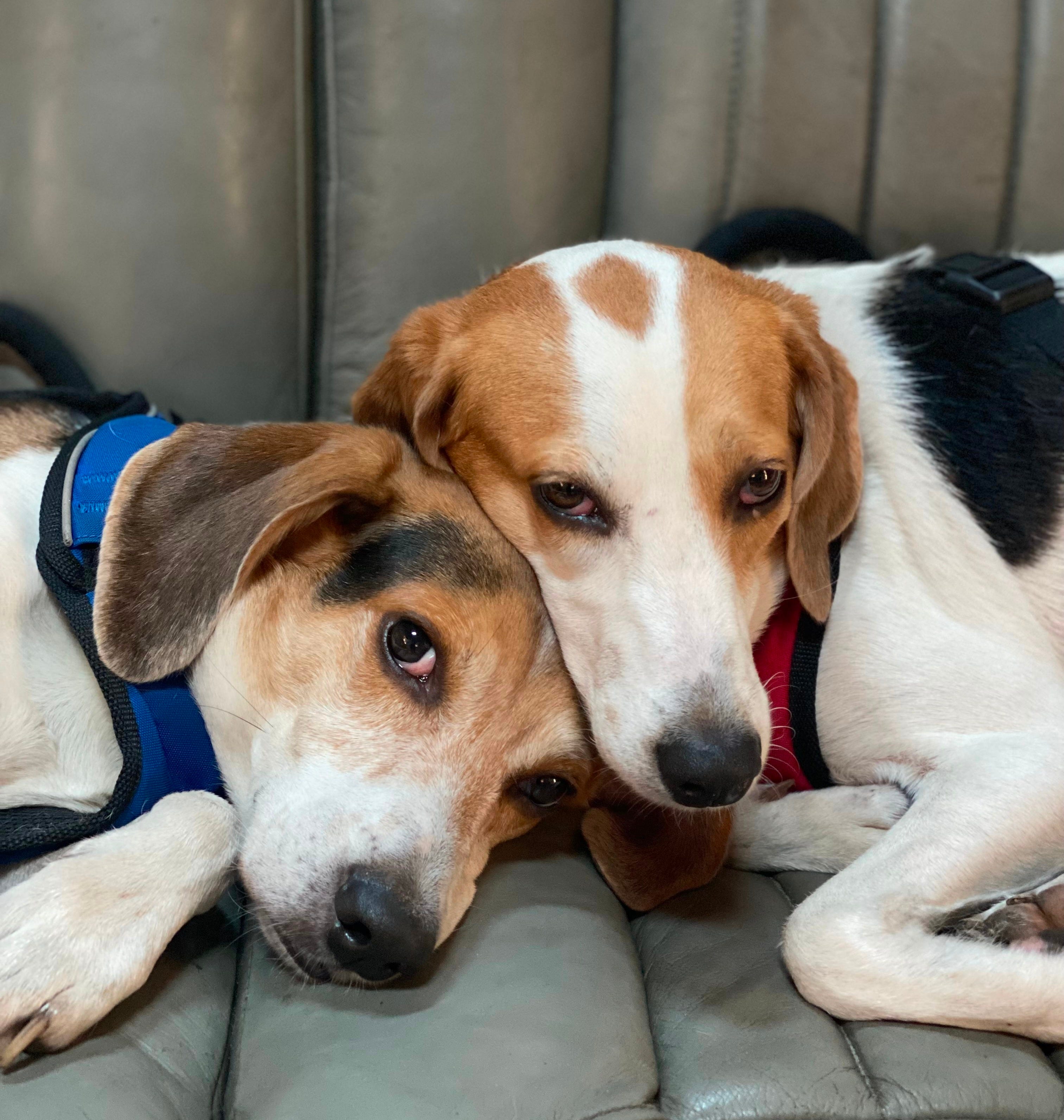
The first thunderstorm of the season rolled through this week, and Wishbone knew it before I did.
He was outside doing his thing when suddenly he stopped and looked toward the sky. He lifted his head and started scanning the horizon, then quietly made his way back toward the house. Within thirty seconds, my phone buzzed with an alert, “lightning detected nearby.”
By the time I knew the storm was coming, he already knew.
Wishbone has always been sensitive to thunderstorms, and for good reason. He survived Hurricane Ian after being abandoned outdoors with his siblings. It was weeks before he was found, hungry and severely injured. That kind of experience leaves a mark.
It left a big one. In the early days, a thunderstorm would send him into a complete freeze with shaking, drooling, not blinking, not moving for hours. Just locked in place with nowhere to go and no way through it. I would hold him close, sing to him, hum, try supplement after supplement. Nothing seemed to touch it. Eventually I realized I had started dreading storms myself. Checking the forecast obsessively, bracing for what was coming. Watching him suffer felt so helpless that the anticipation had become its own kind of anxiety. We were caught in it together.
We’ve done a lot of work around it over the years, and he’s come a long way. These days, when a storm rolls in, he usually heads for his safe space on his own. He has a covered bed with a blanket and a favorite toy inside. Sometimes that’s enough. Sometimes he comes looking for me because he wants acupressure, EFT, or simply the comfort of being close. He knows what he needs now, and he knows how to ask for it.
His sister Piper survived the same storm. She stayed by his side the entire time, even as he lay injured. Same trauma, same starting point.
But Piper’s fear never had one clear source the way Wishbone’s does. She’s sensitive to everything. Loud noises, quick movements, the energy in the room. Last week my pen rolled off my desk and hit the floor. She bolted downstairs. A few moments later she came back up, all wiggly, like she knew she’d overreacted. That’s huge progress. There was a time something like that could have sent her into a complete shutdown.
She’s also my most reliable signal that my own nervous system is off. If I’m doing too much, moving too fast, carrying more than I realize, Piper starts pacing. She’s the first one to tell me. When I slow down and settle, she does too.
Same dog family. Same hurricane. Same starting place.
Two completely different expressions of fear.
And both of them proof that it can get better.
What strikes me most, looking back at where they both started, isn’t how far they had to come. It’s how early the signals were always there. Even when I didn’t yet know how to read them.
This is one of the reasons I find myself thinking about preparation every summer.
Summer in the States brings a lot of change from thunderstorms, fireworks, vacations, visitors, road trips, construction, routines that suddenly look nothing like they did a few weeks ago. To us, these often feel like separate events. To the nervous system, they’re all forms of change.
And while some animals move through those changes without much difficulty, others notice every shift in the environment.
You probably know the ones I’m talking about. Maybe you see your dog in Wishbone with one specific fear, one clear trigger, but intense when it hits. Or maybe you see them more in Piper, sensitive to everything, tuned into the whole emotional weather of the house.
Either way, they need support. It just doesn’t always look the same.
I often describe dogs like Piper as highly sensitive and I don’t mean that as a flaw. They’re simply wired to feel more. The world lands on them differently.
Wishbone is something else. His fear is specific to thunderstorms, and nothing else. That’s not high sensitivity, that’s trauma with a very clear source. He survived Hurricane Ian. He has a reason.
One of the biggest mistakes I see this time of year is waiting until the stressful event has already arrived before trying to help.
People don’t start thinking about fireworks until they hear the first fireworks. They don’t think about travel stress until the trip is right around the corner. They don’t start looking for support until their dog is already hiding, pacing, panting, shaking, or unable to settle.
It’s understandable. That’s how most of us operate.
But when we wait until the nervous system is already overwhelmed, we’ve missed some valuable opportunities to prepare.
This is something I learned with Wishbone the hard way. Florida afternoon storms don’t always announce themselves. Sometimes there’s no time to prepare in the moment, which is exactly why the work we do between storms matters just as much as what we do during them.
This doesn’t mean doing everything at once, and it certainly doesn’t mean a cabinet full of supplements or a complicated protocol. It simply means paying attention early. Listening to the whispers before they become screams.
Over the years I’ve worked with a wide range of tools like EFT, PEMF, Reiki, red light therapy, CBD, flower essences, herbs, custom tinctures, calming music, safe spaces, routine walks. Sometimes one thing makes all the difference. Sometimes it takes a combination. Sometimes what works for one dog does almost nothing for another.
Wishbone and Piper are a perfect example. EFT has been part of both of their journeys. But the way I use it with him looks different than the way I use it with her. His fear has a clear trigger. Hers is woven into how she experiences the whole world. Same tool, different approach.
In the early days with my own dogs, a lot of it was trial and error. But working with so many different animals over the years has taught me how to read what’s actually driving the fear and how to match the approach to the individual animal rather than just trying things and hoping something sticks. That distinction matters, especially when your dog is already struggling and you don’t want to waste time going in the wrong direction.
This is why I always come back to the individual animal. Not the fear. Not the label. The specific dog or cat in front of you. Their history, their nervous system, their particular way of moving through stress.
And this is also why timing matters so much.
You don’t want to try a new supplement the day you’re leaving for vacation. You don’t want to introduce a new technique the morning of a holiday weekend and just hope it works. If your dog is already in a reactive state, that’s not the moment to experiment, that’s the moment you wish you’d started two weeks earlier.
Preparation gives you options. It gives your animal time to build familiarity and positive associations before they actually need the support.
I want to be clear about something. Wishbone still doesn’t love thunderstorms. Piper still startles sometimes. The goal was never to make them fearless, it was to help them move through fear differently. From frozen and unreachable to finding his safe space on his own. From a pen dropping sending her into shutdown to bouncing back up the stairs with her silliness after quickly realizing there was no danger. They still have moments. They just don’t get lost in them the way they used to.
That’s what’s possible. Not perfect. But so much better than where they started.
If you’re not sure where to start, or which approach might be the right fit for your animal specifically, that’s exactly the kind of thing I help people work through. Summer is closer than it feels, and early is always better than scrambling.
The signals are usually already there. Start paying attention now.
This newsletter is free, and I'm glad you're here. If this resonated with you, becoming a paid subscriber is one of the kindest ways to support this work. It helps me keep writing, keeps this space free for everyone, and means more of this kind of content finding its way to the people who need it.

