
The Perfect Storm for Reactive Behavior
Dog & Cat Behavior • The Full Snow Moon • Imbolc • Household Stress

It surprised me at first.
Over the past week, I received a few urgent requests from people in multi-dog households. Dogs who usually manage each other reasonably well were suddenly not managing at all. Increased tension. Irritability. Dogs snapping or fighting with each other in ways that felt out of character.
A coincidence?
As I listened more closely, a common theme emerged. Many of these households were also dealing with a major winter ice storm and extreme temperatures. The details varied. Different homes, different routines, different stress points, but the impact was strikingly similar. Walks were shortened or skipped. Time outdoors disappeared. Routines were disrupted. Dogs who usually release energy through movement were suddenly spending far more time inside, carrying pent up energy alongside the very real household stress of long stretches indoors and shifts in routine. And that wasn’t the only factor. It was one layer in a larger convergence of pressure.
Animals often respond before humans contextualize what’s happening. They don’t wait for language or explanation. They react through their bodies, through behavior, through shifts in tolerance and space.
This week is carrying a lot of pressure and will continue into the days ahead.
There’s a broader undercurrent many people are carrying right now. A collective sense of unrest and uncertainty. Even when it isn’t spoken aloud, that background hum of worry, grief, or feeling unsafe lives in the nervous system. Sensitive humans feel it quickly. Animals often feel it even faster.
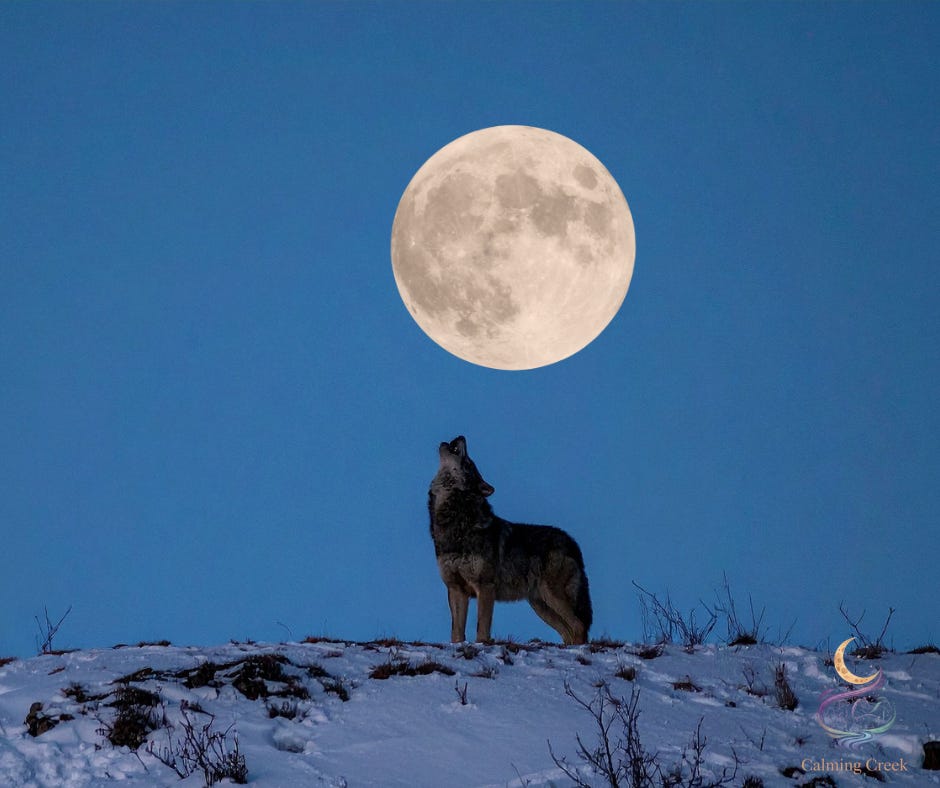
On top of the environmental strain and collective stress already present, more subtle energetic factors are at play. A full Snow Moon is rising right alongside Imbolc.
That overlap is rare and meaningful. The full Snow Moon illuminates what’s already present, emotions, fatigue, tension that’s been quietly building, while Imbolc marks the threshold between winter and spring, the return of light. Not the arrival of new life yet, but the first subtle stirring beneath the surface. A spark held in the dark. A flame that needs protection before it can grow.
Together, they describe a moment of heightened sensitivity. Feelings brought to the surface at the same time our bodies are still meant to rest. Light without resolution. Awareness without action.
Thresholds are destabilizing.
They compress nervous systems. They shorten patience. They reduce margin.
In multi-dog households especially, there’s already an ongoing negotiation space, hierarchy, timing, access. When the system tightens, there’s less room to absorb stress. What’s usually manageable suddenly isn’t.
Behavior gets louder not because something is “wrong,” but because an imbalance is being felt.
I often see this during full moons or seasonal shifts. Restlessness increases. Sensitivity sharpens. Dogs who normally self-regulate need more support. Dogs who tolerate each other well need more space than usual.
This isn’t misbehavior. It’s information.
If you’re noticing more tension in your home right now, it can help to check in with yourself too. Even when we think we’re doing okay, periods like this can quietly load the nervous system. Taking a few moments to support your own regulation can help shift the entire tone of the household.
Animals respond to what’s happening in the environment, including the emotional and nervous system climate of the humans around them. They sense shifts before we name them. They react before we make meaning.
This is why clamping down on behavior during these moments often escalates things. Control adds pressure to an already tight system.
Support looks different.
That might look like a few slow breaths before you intervene, or a short burst of movement to shake off built up tension. Even a thirty second dance party with your dogs can help. Sometimes it looks like sitting on the floor with your animals without asking anything of them. Small acts like these signal safety and soften the shared nervous system.
Sometimes it means fewer demands. More rest. Less stimulation. Allowing distance instead of enforcing togetherness. Quiet co-presence rather than correction.
This is not the time to push for harmony. It’s the time to soften the container.
Imbolc isn’t about action yet. It’s about tending the small flame without exposing it to the wind. Protecting what’s vulnerable while it gathers strength.
Imbolc offers a different way to respond. Not by fixing or doing, but by tending what’s already here. These are gentle invitations you can offer, both for yourself and for the animals you live with:
Let your animals choose more space or closeness than usual. Simply notice what they choose.
Spend a few minutes together without an agenda. No training, no fixing, just being.
Light a candle and name what feels strained right now.
Ask yourself: Where am I holding this in my body? Have awareness.
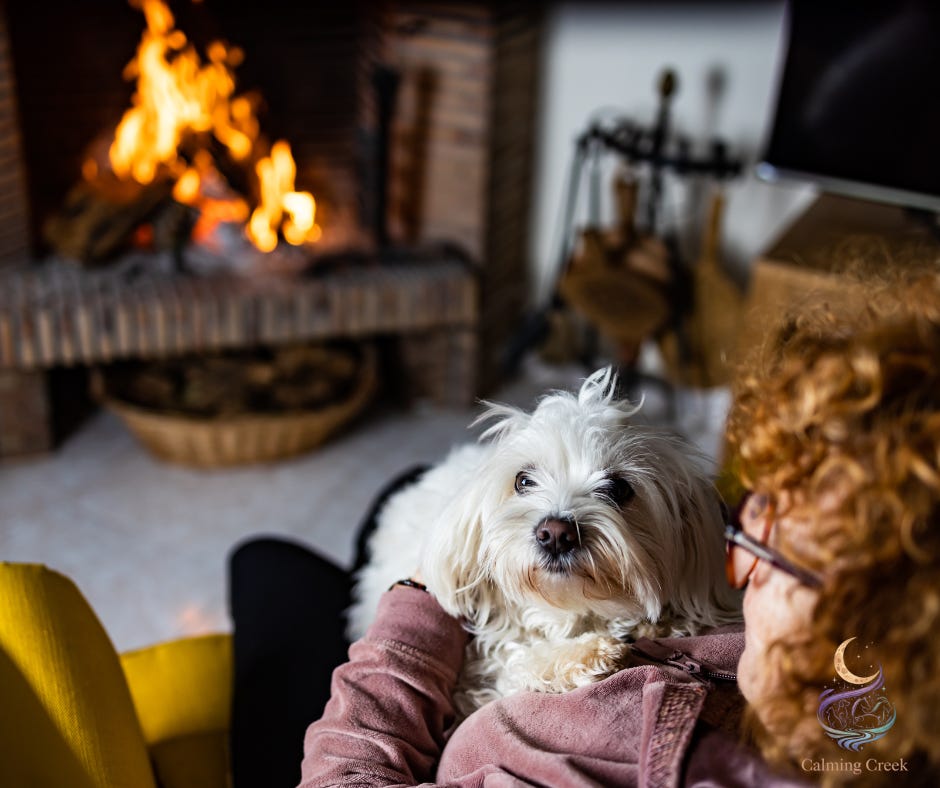
Animals don’t need us to fix them in these moments. They need us to notice them, including what’s happening in our own bodies. The feelings we try to push down don’t disappear. They stay in the nervous system, and animals can feel them just as clearly.
And while many of the households I worked with this week shared common pressures, each dog also had something specific to say about what they needed within it. If you’ve addressed the broader context and things still feel unsettled, that’s often a sign there’s more individual information waiting to be heard.
When we slow down enough to see the pattern, behavior begins to make sense. And when the system softens, the urgency often does too.
This is not a setback. It’s a response.
And often, it’s an invitation to listen sooner than we’re used to.
Thank you so much for reading this post!
🔗 Book an animal communication session here
My name is Melissa, and I’m an animal communicator and energy healer. I live on a little farm in the woods where I’m happily outnumbered by animals: seven dogs, three cats, and a mix of other furry, feathered, and hooved friends who keep life interesting. You can learn more about my work at I’d love to hear from you! Whether you have stories to share or questions to ask, don’t hesitate to join the conversation in the comments section below.
For more ways to connect:
Disclaimer: The information shared in this blog is for educational and informational purposes only. I am not a veterinarian, and my services are intended as a complementary practice to support your pet’s overall well-being. They are not a substitute for professional veterinary care, diagnosis, or treatment. Always consult your veterinarian regarding any medical concerns, conditions, or treatments your pet may require.
YES. Every word of this is important wisdom that all people with companion animals need to know. Thank you :))).